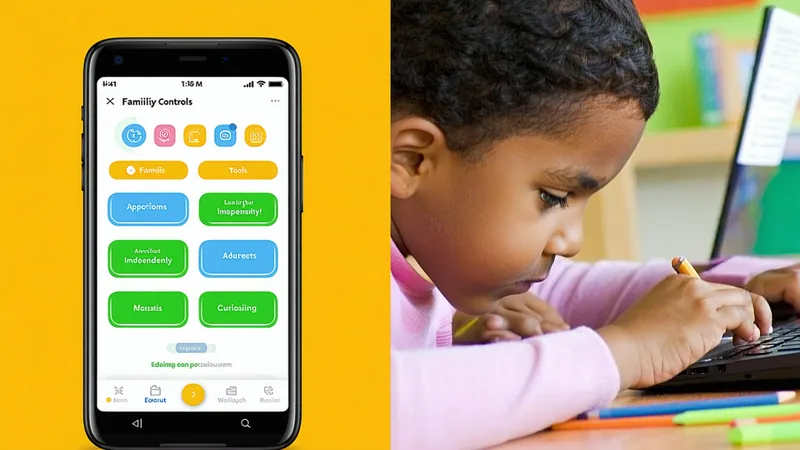
Content filtering is one of those parenting tools that sounds simple until you sit down to actually configure it. Block "violence"? Sure — but does that include news? History documentaries? Block "adult content"? Agreed — but does that accidentally filter out age-appropriate health information your 11-year-old needs? The challenge isn't the technology. It's that the "right" filter settings change dramatically across developmental stages, and no single configuration works for a 7-year-old and a 13-year-old living in the same house.
This guide walks through what filtering makes sense at different ages — not as a prescription, but as a starting framework you can adjust for your specific child and family values.
Ages 5–8: The Curated Garden Approach
For young children in the 5–8 range, the filtering philosophy is fairly straightforward: keep the digital environment as curated as the physical one. You wouldn't leave a 6-year-old unsupervised in a public library and say "just browse whatever looks interesting." The same logic applies online.
At this stage, the most effective approach is usually an allowlist, not a blocklist. Rather than trying to block everything problematic (an impossible task), you allow only a specific set of known-good apps and sites — YouTube Kids instead of YouTube, ABCmouse or Khan Kids for learning content, and nothing else. This isn't over-restriction; it's appropriate scaffolding for a child whose media literacy hasn't developed yet.
Categories worth blocking by default at this age: social media of any kind (there's nothing age-appropriate there for a 6-year-old), mature gaming content, anything tagged as news or political content (not because these things are bad, but because context matters enormously and young kids can't yet contextualize disturbing news stories), and any messaging platforms that allow contact from strangers.
What's often over-filtered at this age: educational science content that mentions bodies or human biology, animated content from international sources that may be mislabeled, and cooking or DIY videos. Use common sense overrides for legitimate content your child asks about specifically.
Ages 9–11: Training Wheels, Not a Cage
The 9–11 range — typically 3rd through 5th grade — is when filtering needs to shift from curation to graduated exposure. Your 10-year-old is going to encounter the wider internet at school, at friends' houses, and in the normal course of growing up. Filtering at home that's significantly more restrictive than what they experience everywhere else doesn't protect them; it just means they learn to work around it.
At this stage, the more useful frame is category-based filtering with conversation. You can reasonably continue to block graphic violence, pornography, and predatory social media platforms without this feeling oppressive. But blanket-blocking broad categories like "games" or "social" becomes counterproductive — Minecraft is a game, iMessage is technically social.
Consider opening up: age-appropriate gaming platforms (Roblox has its own safety considerations, but isn't inherently inappropriate for this age group with proper supervision), YouTube with safe search on (rather than YouTube Kids, which many 10-year-olds have outgrown), and basic messaging with family and known classmates.
A scenario that comes up often: a 10-year-old in 5th grade wants to watch gaming content on YouTube — walkthrough videos, Minecraft builds, that kind of thing. This is entirely normal and age-appropriate, but generic "video" blocking would catch it. The right call is usually to allow YouTube with safe search enabled, not to block the category entirely.
Ages 12–14: The Middle School Complexity Zone
Middle school is where content filtering gets genuinely hard. A 13-year-old is cognitively and emotionally different from a 10-year-old in ways that matter a lot for this discussion. They have legitimate reasons to access a much wider range of content — current events, health information, creative communities — and heavy-handed filtering at this age frequently backfires.
Research on restrictive parenting styles and adolescent risk-taking consistently suggests that high restriction paired with low communication tends to produce kids who find workarounds rather than developing genuine judgment. We're not saying restrictive filtering is bad — we're saying that filter settings for a 13-year-old should be paired with active conversation about why you've made the choices you have, and what they should do when they encounter something concerning.
At this stage, the most important filters are: pornography (still appropriate to block, and most adolescents actually appreciate that the family rule exists even if they'd never say so), content promoting self-harm or eating disorders (this is where filtering can genuinely matter for vulnerable teens), and predatory contact platforms (random chat apps, certain Discord servers — not Discord itself, but specific server types).
Social media is the hardest call at this age. COPPA sets 13 as the minimum age for data collection without parental consent, and most major platforms — Instagram, TikTok, Snapchat — set their minimum age at 13. But having an account isn't the same as having unrestricted access. Many families in this age range allow platform access with oversight: keeping the app on a shared device initially, doing occasional check-ins on who they're following, and establishing clear expectations about private accounts and stranger contact.
Ages 15–17: Filters as Conversation Starters, Not Gatekeepers
By high school, the filtering conversation shifts from "what do I block" to "what do we discuss." A 16-year-old has a smartphone with a browser. If they want to find something, they will find it. The value of filtering at this stage is less about blocking and more about having a visible shared understanding of family values around media use.
Some categories remain worth filtering even for older teens: content designed to radicalize or recruit, certain categories of graphic violence (not because teens can't handle difficult content, but because gratuitous content has no educational upside), and predatory contact platforms. Pornography filters also remain appropriate as a family default, with the understanding that this is a values discussion as much as a technical one.
What rarely works at this age: blocking broad content categories that are legitimately part of adolescent life, surveillance-style monitoring of every message and post, or filtering so aggressive that teens use a friend's device as their primary internet access. The goal is a teenager who makes reasonably good digital choices on their own, not a teenager who has been locked out of the internet entirely.
One Rule Across All Ages: Filter Settings Should Be Explained
Whatever settings you choose, the most important practice is telling your child what you've done and why. "I've set up some filters on your devices — here's what they block and why" is a very different conversation from filters that appear silently and create friction with no context. The first version respects the child enough to give them the reasoning. It also makes the conversation easier when — not if — something is filtered that shouldn't be, or when they encounter something concerning that slipped through anyway.
Filters are tools. Good digital parenting is a relationship. The best outcomes come from parents who use both.